
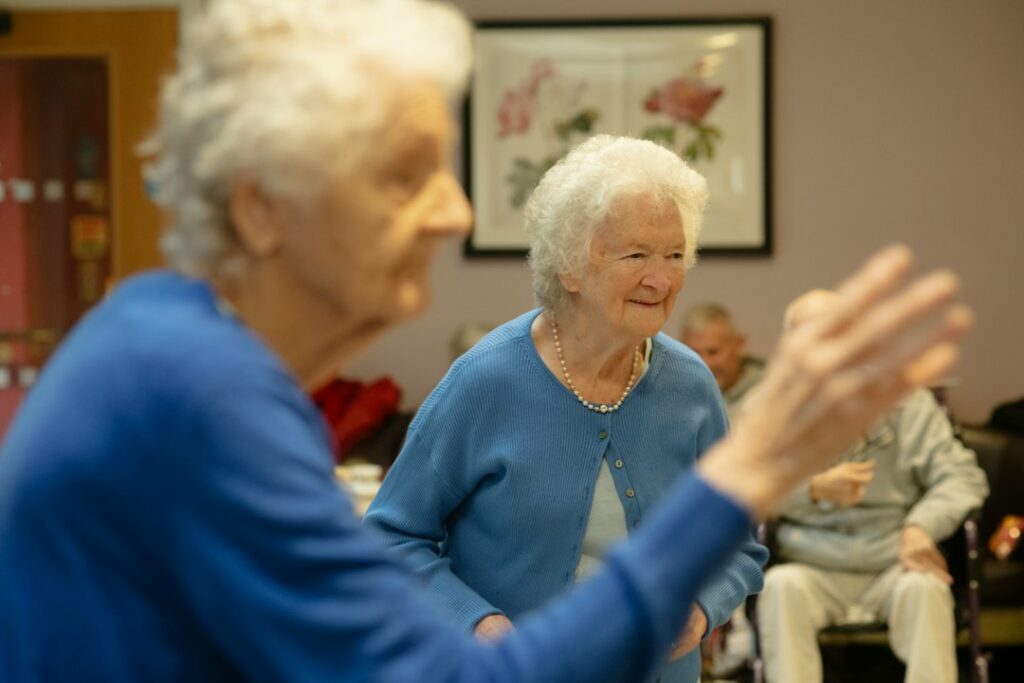
What role do volunteers play in assisted living communities?
Volunteers help create companionship, meaningful activity, and connection beyond the daily care provided by staff. Their contributions may be simple, such as sharing a conversation, reading aloud, helping with a craft, or accompanying a resident to a group activity, but these interactions can support emotional well-being and a stronger sense of community.
Assisted living staff are responsible for health, safety, medications, personal care, meals, and daily operations. Volunteers generally complement that work rather than replace it. A volunteer may offer time and attention that staff members, despite their efforts, cannot always provide during every quiet moment.
For residents and families in Freeland, PA, volunteer involvement may be especially valuable during winter weather, when outdoor activities are limited and opportunities for informal social contact can become less frequent.
What kinds of activities can volunteers provide?
Volunteer activities vary according to the community, the volunteer’s abilities, and residents’ interests. Common roles include:
- Visiting with residents who enjoy conversation
- Reading books, newspapers, poetry, or short stories
- Playing cards, board games, puzzles, or simple table games
- Helping with music programs, sing-alongs, or dancing
- Supporting arts, crafts, gardening, or seasonal projects
- Assisting with religious, cultural, or educational gatherings
- Writing letters, addressing cards, or helping residents use technology
- Accompanying residents to approved activities within the community
- Helping organize resident celebrations or social events
- Sharing hobbies such as knitting, photography, history, cooking, or woodworking through demonstrations
The most helpful activities are not necessarily elaborate. A resident who has limited mobility may value a regular conversation just as much as a large group event. Another resident may prefer quiet companionship, while someone else may look forward to a weekly game or music session.
Can volunteers help with personal care or medical tasks?
Usually, volunteers do not provide clinical care or hands-on personal care unless they have a specific role, training, and authorization under the community’s policies and applicable requirements. Volunteers should not independently give medications, transfer residents, assist with bathing, provide wound care, handle medical equipment, or make decisions about treatment.
These boundaries protect residents and volunteers. Personal care tasks can involve fall risks, privacy concerns, infection-control procedures, and individual care instructions that require trained personnel.
A volunteer who notices a concern—such as a resident appearing unusually confused, weak, distressed, short of breath, or unsteady—should notify a staff member rather than attempting to diagnose or manage the situation. The same principle applies if a resident reports pain, a medication problem, a fall, or mistreatment.
How do volunteers support residents who feel lonely?
Regular, reliable contact can reduce the sense of isolation that some residents experience after moving away from a longtime home or losing familiar routines. Volunteers may help by listening without rushing, asking about a resident’s past, and showing interest in personal preferences.
Good conversation does not require a volunteer to know exactly what to say. Useful topics might include:
- Family traditions and memorable holidays
- Favorite music, books, hobbies, or recipes
- Childhood memories and previous work
- Local weather and seasonal changes
- Photographs, keepsakes, or objects in the resident’s room
- Current activities taking place in the community
Some residents have hearing loss, speech difficulties, memory changes, or limited English proficiency. Volunteers can help by facing the resident, speaking clearly, allowing extra time for responses, and avoiding corrections that may cause embarrassment. If communication becomes difficult, staff can suggest approaches that respect the resident’s abilities and preferences.
What should volunteers understand about dementia?
Residents living with dementia may benefit from calm, familiar, and repeated interactions. Volunteers should understand that memory loss can affect conversation, orientation, judgment, and the ability to follow complex instructions.
A resident may ask the same question repeatedly, forget a previous visit, become suspicious, or lose interest in an activity. These behaviors are symptoms of a health condition, not necessarily signs of rudeness or rejection. Short visits, familiar music, simple games, folding towels, looking through photographs, or discussing a well-known hobby may work better than activities requiring several steps.

Volunteers should avoid arguing about facts or forcing participation. If a resident becomes upset, the appropriate response may be to reduce stimulation, shift to another topic, or ask staff for assistance.
Are there privacy and safety rules for volunteers?
Yes. Volunteers are expected to respect privacy, confidentiality, personal boundaries, and community safety procedures. A resident’s health information, family circumstances, finances, and personal history should not be shared casually with others.
Volunteers should also ask before entering a resident’s room, touching personal belongings, taking photographs, or sharing a resident’s story publicly. Permission from a family member does not always replace the community’s privacy requirements.
Other practical safety expectations may include:
- Following sign-in and sign-out procedures
- Wearing identification if required
- Reporting injuries, hazards, or concerning changes to staff
- Staying within approved areas
- Following infection-control guidance during illness outbreaks
- Avoiding visits when sick
- Using safe practices around mobility devices and oxygen equipment
- Never accepting substantial gifts, money, or personal loans from residents
Boundaries are particularly important because residents may be vulnerable to confusion, financial exploitation, or unwanted influence. Friendly relationships are appropriate, but volunteers should not manage a resident’s money, borrow possessions, or become involved in private family disputes.
How can families decide whether volunteering is appropriate for a resident?
Families can begin by asking what the resident enjoys, tolerates, and finds meaningful. A resident who dislikes large gatherings may prefer one-on-one visits. Someone who has always enjoyed gardening might appreciate a seasonal planting activity, while another person may prefer sports discussions, crafts, or quiet reading.
It is also useful to consider energy levels, hearing or vision changes, mobility, cultural preferences, and the resident’s comfort with unfamiliar people. Participation should remain voluntary. A resident should be able to decline a visit or activity without pressure.
Staff can help match volunteer activities to the resident’s care plan and current abilities. If a resident’s interests or behavior change, the volunteer approach may need to change as well.
What makes a volunteer relationship successful?
Consistency, patience, and respect matter more than a highly specialized skill. Arriving as scheduled helps residents develop trust. Keeping visits reasonably predictable can be reassuring, especially for people who find changes in routine difficult.
Volunteers should focus on the resident rather than trying to control the conversation or complete an activity perfectly. A successful visit might involve ten minutes of conversation, a favorite song, or sitting quietly together.
For residents in an assisted living community, volunteers can provide a valuable link to ordinary social life: conversation with someone who is not part of the care routine, an opportunity to share a talent, or a reason to look forward to a particular day. Their role is most effective when it works alongside trained staff, honors resident choice, and treats every interaction with dignity.
